Discover the Amazing
Almansa Guitar
Since 1989, the Almansa guitar has been built in the Spanish City of Almansa.
Situated in the province of Castile-La-Mancha, Almansa has had a turbulent history. Now in more peaceful times, it's dominated by the guitar makers of Almansa and Alhambra classical guitars.
Pedigree of Almansa
Despite the fact that the company has only been in existance since 1989, the founders brought skills and techniques acquired from time spent in the workshops of other makers such as Rodriguez.
Like many of today's Spanish makers, Almansa combine these traditional skills with modern production methods where appropriate. And their legion of fans around the world love the results.
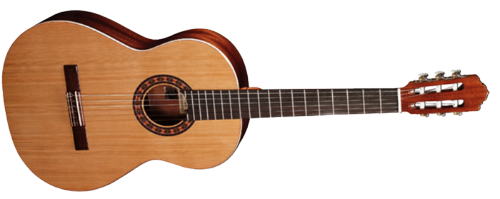
It's this ability to combine old methods with new that's enabled Spanish guitar makers to compete in the lower and mid price ranges as well as the professional end of the market.
I think it's wonderful that these relatively small classical guitar manufacturers have continued to prosper alongside the big multi-nationals.
How Almansa Acoustic Guitars Are Made
This video shows the amazing talent the guitar makers at Almansa bring to the instruments they create.
The Spanish Heel: Nothing To Do With Shoes
The traditional methods brought to Almansa in 1989 are evident in all the guitars they make, from the least expensive to top of the range professional guitars.
Never mind the Cuban heels of the male flamenco dancers, the most important heel of all is the Spanish Heel.
The Spanish Heel is a traditional construction method that is at the heart of every Almansa classical guitar.
The neck of the guitar is notched at the heel to join the sides. The body is then constructed around the side assembly and the neck. This results in a very strong neck and body construction.
The advantage of this method is that the guitar has a greater than normal neck angle, which allows for a lower action and greater stability.
Almansa Guitar Videos
Find Almansa Guitars For Sale
If you'd love to own one of these beautiful guitars, then click here to search for models for sale.
Do You Own An Almansa Acoustic Guitar?
I'd like your opinion about your Almansa guitar. Just follow the link and complete the form.
Your opinion of these great guitars will be turned into your own page on the Classical Guitar World site. If you like you can also upload a photograph of you or your guitar.
Lost? Search Our Site!
Classical Guitars --- Spanish Guitar Makers --- Other Guitar Makers
Classical Guitar Players --- History of Classical Guitar --- Learn to Play Classical Guitar
Build Classical Guitars --- Guitar Making Schools --- Privacy Policy
Used Classical Guitars for Sale --- History of Classical Guitar